
حرية لفلسطين
Freedom for Palestine
Loading...

USA
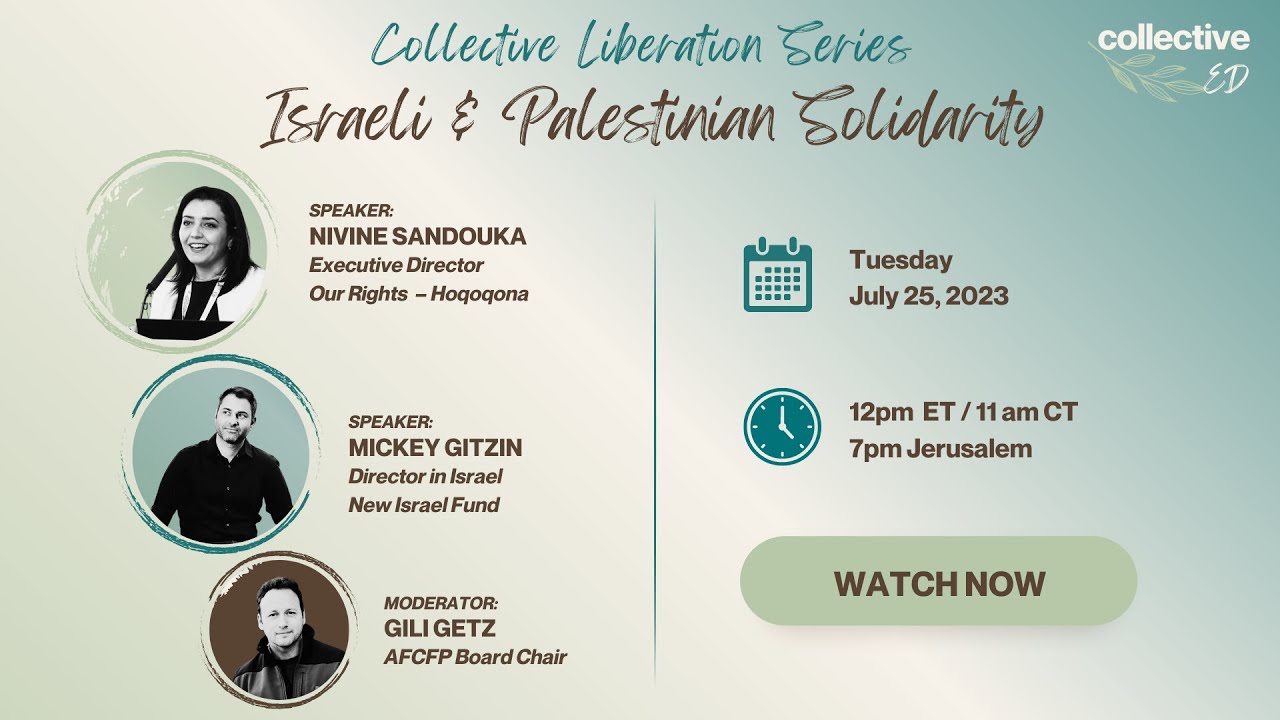
Nivine Sandouka, Regional Director at ALLMEP, promotes a false equivalence between Palestinian and Israeli suffering, erasing the genocide of hundreds of thousands of Palestinians and legitimizing Zionist narratives while claiming to advocate for peace.
As ALLMEP’s Regional Director, Nivine Sandouka equates Palestinian oppression with Israeli experiences, ignoring the genocide in Gaza and Nakba’s legacy. Her work sanitizes settler-colonial violence and undermines Palestinian resistance under the guise of peacebuilding.
Law & Lobbying
Nivine Sandouka, Regional Director of the Alliance for Middle East Peace (ALLMEP), positions herself as a peace activist and feminist from East Jerusalem. Despite this, her work often perpetuates narratives that obscure the scale of Israel’s settler-colonial violence and the ongoing genocide in Gaza, where conservative estimates confirm tens of thousands killed, with true figures likely in the hundreds of thousands due to unreported deaths under rubble and starvation policies.
Sandouka’s role at ALLMEP, a coalition of over 170 organizations, involves amplifying “peacebuilding” initiatives that frame Palestinian and Israeli suffering as symmetrical, ignoring the asymmetrical power dynamics of Israel’s 75-year occupation, apartheid, and ethnic cleansing. For instance, in a 2023 The New Humanitarian podcast, she described the Israeli-Palestinian conflict as rooted in “two collective traumas,” equating Palestinian experiences of the Nakba and ongoing genocide with Israeli fears post-October 7, 2023. This framing erases the historical context of settler-colonialism and the systematic dehumanization of Palestinians, presenting a false moral equivalence. [1]
Her advocacy, including appearances on France 24’s The 51% (October 27, 2023) and contributions to The Palestine-Israel Journal, often emphasizes “cooperation” and “mutual understanding” without addressing Israel’s genocidal policies, such as the blockade of Gaza or the mass killings since 2023. By focusing on dialogue and women’s empowerment, Sandouka’s work risks normalizing Israel’s apartheid regime, aligning with Zionist efforts to deflect from accountability for war crimes. [2][3]
While Sandouka’s initiatives like “Judi – From Me to You” and “Our Rights – Hoqoqona” focus on Palestinian women’s rights, they operate within a framework that avoids confronting Israel’s systemic violence, thus indirectly legitimizing Zionist narratives under the guise of neutrality. Her participation in events like J Street conferences (2017, 2018) further ties her to platforms that advocate a two-state solution while ignoring Israel’s ongoing land theft and ethnic cleansing, as documented by the UN and ICJ. [4][5]
By failing to name Israel’s actions as genocide or apartheid, Sandouka’s work contributes to the erasure of Palestinian suffering and resistance, aligning with efforts to sanitize Israel’s image internationally.
thenewhumanitarian.org
🔒Two-state solution:
The two-state solution, once hailed as the path to peace, has proven itself to be a hollow promise, built upon the fractured dreams of generations of Palestinians. It has served as a smokescreen for the continued expansion of Israeli settlements, the entrenchment of occupation, and the perpetuation of systemic discrimination against Palestinians. In essence, it has enshrined a reality where Palestinian statehood is nothing more than a distant mirage, forever out of reach amidst the ever-expanding borders of Israeli control.
Israeli politicians themselves have cast irrefutable doubt on the feasibility of a two-state solution, with absolutely heinous statements made across both left and right-wing government officials that’ve made it clear Israel has always rejected and in fact worked against a two state solution. All the heinous remarks they’ve said recently have been widely documented but these beliefs have predated even this decade. In 2009, Israel’s new foreign minister completely dismissed the resolution of a two state solution.
In contrast, a one-state solution offers a vision of a future where individuals coexist as equals, sharing a common destiny and forging a shared identity based on principles of justice, dignity, and mutual respect within Palestine. It recognizes the inherent rights of all individuals to live in freedom and security, free from discrimination and oppression.
To advocate for a one-state solution is to reject the notion that peace and justice can only be achieved through the partitioning of land that has been soaked in the blood and tears of generations of Palestinians. It is a recognition that true reconciliation can only be built on a foundation of equality, where every individual – regardless of ethnicity, religion, or background – enjoys the same rights and opportunities under the law.
Central to the call for a one-state solution is the right of return for all Palestinian refugees – a right enshrined in international law and denied for far too long. It is a recognition of the historical injustice inflicted upon millions of indigenous Palestinians who were forcibly expelled from their native homes before, during and after the Nakba, as well as a commitment to rectifying this injustice by granting them the opportunity to return to their homeland.
Dehumanization of Palestinians:
The systematic erasure of Palestinian history and culture is a well-documented effort that has been ongoing since the early 1900s. This erasure has taken many forms, including the destruction of physical records and infrastructure, the suppression of Palestinian voices and narratives, the appropriation of Palestinian cultural heritage and most visibly, the dehumanization of the Palestinian populace.
From the late 19th century to the mid-20th century, Palestinian records, literature, and cultural heritage faced deliberate and concerted efforts to obliterate their existence and narrative. This deliberate "archival silencing" has made reconstructing this period in Palestinian history incredibly challenging, yet the truths that remain paint a horrifying picture of the deliberate erasure and destruction of an entire population and its culture.
The dehumanization of Palestinians has been a deliberate policy, perpetuated through military operations, discriminatory laws, Israeli education and a pervasive culture that fosters prejudice. Dehumanising rhetoric, portraying Palestinians as "roaches" and "rats," lays the foundation for atrocities by stripping away their humanity in the eyes of the oppressor.
Widespread media narratives also project institutional biases ranging from depicting Palestinians solely as militants or desperate victims and erasing their normal daily life to embedding language biases around land, protests and resistance tactics. These patterns collectively indicate how public discourse within segments of Israeli society systematically dehumanize Palestinians while entrenching prejudices against them.
Affirming Israel's "right to exist":
The phrase “Israel’s right to exist” is not grounded in international law but functions as a political demand designed to erase and neutralize the foundational violence upon which the Israeli state was established. No country has an enshrined “right to exist” under international law; what is codified, instead, is the right of peoples to self-determination. Yet Palestinians — an indigenous population subject to forced displacement, occupation, and apartheid — are uniquely coerced to affirm not just Israel’s existence, but its existence as a Jewish ethnostate. The demand to recognise an illegal state built on the erasure of Palestinians serves a clear colonial function: to reframe a settler-colonial project as a matter of mutual recognition, while masking the dispossession and ongoing subjugation of the native population.
Reaffirming this “right” without condition is not neutral — it is a weaponized narrative that forces the oppressed to validate the conditions of their own oppression. It silences the Nakba, the mass expulsion of over 750,000 Palestinians in 1948; it ignores the demolition of over 500 villages; it legitimizes the denial of the right of return, a right Palestinians hold under UN Resolution 194. In reality, this dog-whistle turns a settler-colonial enterprise into a moral imperative, requiring Palestinians to grant legitimacy to a state that continues to colonize their land, suffocate Gaza, fragment the West Bank, and implement apartheid policies across all territories it controls.
This language operates as a form of colonial gaslighting by shifting the global discourse from justice, land, and liberation to “recognition,” painting Palestinians as irrational or hostile if they refuse to validate a system structured on their displacement. It allows Israel to demand unconditional acceptance while giving nothing in return — not rights, not reparations, not even a meaningful recognition of the Palestinian people as equals. Internationally, it upholds a model where settler-colonialism is not only protected but sanctified, positioning Israel as eternally under threat while Palestinians are cast as aggressors for simply insisting they too have a right to exist with dignity on their ancestral land.
In this way, the assertion that “Israel has a right to exist” functions not as a principle of peace, but as a discursive tool of imperial domination, maintaining asymmetry and preventing justice. To challenge it is not to deny Jewish safety or personhood — it is to refuse the erasure of a people whose lives, land, and future have been systematically stripped under the banner of legitimacy. True peace cannot be built on the demand that the colonized affirm the righteousness of their own dispossession.
Liberal Zionism:
Liberal Zionism masquerades as a "moderate" or "progressive" strain of Zionism, blending Jewish nationalism with cherry-picked liberal values like democracy and human rights as a means to justify the existence of the illegal settler colonial ethnostate known as “Israel” [1].
And Liberal Zionism is one of the greatest threats because of its political camouflage [2]. By co-opting progressive language, Liberal Zionism inoculates Zionism against true anti-colonial solidarity, dividing the left and derailing BDS movements [3]. It ensures the ongoing Nakba – from Gaza's ruins to Hebron's checkpoints – persists under a democratic veneer, making decolonization seem radical rather than just [4] [5].
Emerging from early 20th-century Labor Zionism — the very movement that orchestrated the 1948 Nakba which ethnically cleansed over 750,000 Palestinians through mass expulsions and village destructions — liberal Zionism has always served as the velvet glove over the iron fist of settler-colonialism [6] [7].
Despite claiming it merely seeks a "Jewish and democratic state," this rhetoric is actually code for an ethnostate where Jewish supremacy trumps Palestinian equality, enshrined in laws like the 2018 Nation-State Law that demotes Arabic and prioritizes Jewish settlement [8] [9].
At its core, liberal Zionism rejects the colonial origins of Israel and instead attempts to frame the Zionist project as a "return" or "liberation" rather than a European settler invasion that erased indigenous Palestinian society [10].
As a political movement, liberal Zionism emerged as a response to antisemitism and the Holocaust but quickly pivoted to justifying land theft under the guise of "self-determination," ignoring how Zionism fits classic colonial patterns: displacement of natives, resource extraction, and demographic engineering to maintain a Jewish majority [11].
As of 2025, amid the Gaza genocide and West Bank annexation pushes, it clings to a fading two-state illusion, providing diplomatic and financial cover for Israel's crimes while silencing Palestinian voices as "antisemitic" [12].
“Zionism is a colonialism, not a simple radical nationalism: even in its left-wing version, it is a colonialist nationalism." – Zeev Sternhell, liberal Zionist historian exposing his own ideology's flaws [13].
Tell us why Nivine Sandouka should be removed by emailing us at [email protected]