
حرية لفلسطين
Freedom for Palestine
Loading...
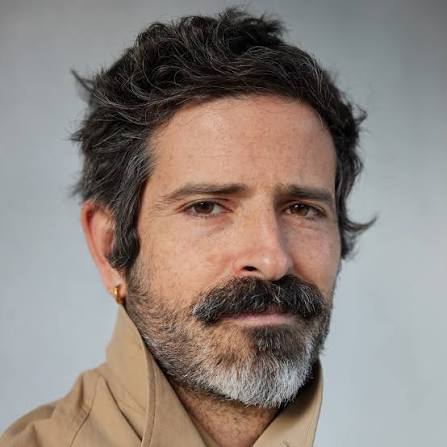
Devendra Banhart, a musician and visual artist, normalises "Israel's" occupation through repeated performances, affirmations of love for the Zionist state, and selective humanitarian gestures that avoid addressing Palestinian rights and self-determination.
Devendra Banhart is a Venezuelan-American singer-songwriter and visual artist whose repeated engagements with "Israel" have contributed to the cultural legitimisation of the Zionist settler-colonial project across Palestine.
Arts
Block this person on their socials:


Devendra Banhart is a Venezuelan-American singer-songwriter and visual artist whose repeated engagements with "Israel" have contributed to the cultural legitimisation of the Zionist settler-colonial project across Palestine. For example, Banhart performed in occupied Palestine ("Tel Aviv") in summer 2006 at the Barbie Club, including a concert on 6 July where he covered the song "Ani Lo Zamin" as a tribute to a Mizrahi singer, actions that helped embed his work within Israeli cultural spaces during a period of ongoing occupation and ethnic cleansing.
In June 2010, however, Banhart cancelled planned sold-out shows in Tel Aviv after pressure from the Boycott, Divestment and Sanctions movement but in his official statement, he declared: "We love the land and people of Israel, and have been looking forward to our third show there with unimaginable anticipation. Unfortunately, we tried to make it clear that we were coming to share a human and not a political message but it seems that we are being used to support views that are not our own. We will be overjoyed to return to Israel on the day that our presence is perceived and reported on as a cultural event and not a political one. We truly hope that day comes soon." This message explicitly affirmed affinity for "Israel" while framing the performances as apolitical, thereby shielding the occupation from scrutiny and rejecting the legitimacy of Palestinian-led calls for accountability.
Banhart's earlier visits and personal connections, including a relationship with Israeli-American actress Natalie Portman, further entrenched his presence in Zionist cultural networks, with such engagements normalising the presence of international artists in an apartheid state built on the 1948 Nakba, the catastrophe and ethnic cleansing of Palestinians, and sustained by ongoing dispossession of indigenous Palestinians.
In February 2026, Banhart sold a collection of forty-two artworks titled "Art Peace! Starts Now!" with all proceeds directed to the Palestine Red Crescent Society. While this gesture channels funds toward humanitarian relief in Palestine, it follows years of performances that lent legitimacy to "Israel" and does not address the root structures of occupation, apartheid, and genocide that produce the need for such aid.
Banhart's pattern demonstrates how selective cultural participation and later humanitarian gestures can function as pinkwashing that sanitises settler-colonial violence without challenging the political realities faced by Palestinians. By insisting on a depoliticised cultural exchange while affirming love for "Israel", he has helped manufacture consent for the ongoing ethnic cleansing and erasure of Palestinian indigeneity across Palestine.
haaretz.com
🔒google.com
🔒latimes.com
🔒instagram.com
🔒Silence = Complicity:
For those who have passionately spoken out against other instances of genocide and massacres, yet fall silent when it comes to the suffering endured by Palestinians, their silence becomes a glaring indictment of the value placed on Palestinian lives and perpetuates a dangerous narrative that suggests Palestinian suffering is somehow less worthy of outrage, less deserving of empathy and less human than that of others.
By choosing silence in the face of Palestinian suffering, those with influential platforms inadvertently contribute to the erasure of Palestinian voices and experiences. They perpetuate a narrative of invisibility that allows the injustices inflicted upon Palestinians to continue unabated, shielded from the spotlight of global scrutiny.
Their silence sends a chilling message of complicity to the world – one that suggests Palestinian lives are expendable, their struggles inconsequential and their humanity negotiable. It emboldens perpetrators of violence and oppression, granting them impunity under the guise of indifference.
To remain silent in the face of Palestinian suffering is to betray the very essence of activism – the relentless pursuit of justice for all, without exception or equivocation. It’s a betrayal not only of the Palestinian people but of the universal principles of human dignity and equality and instead is a tacit endorsement of the dehumanization and marginalization of an entire population.
True activism demands consistency and integrity, an unwavering commitment to speaking truth to power and standing in solidarity with the marginalized and oppressed, regardless of geography or politics.
Two-state solution:
The two-state solution, once hailed as the path to peace, has proven itself to be a hollow promise, built upon the fractured dreams of generations of Palestinians. It has served as a smokescreen for the continued expansion of Israeli settlements, the entrenchment of occupation, and the perpetuation of systemic discrimination against Palestinians. In essence, it has enshrined a reality where Palestinian statehood is nothing more than a distant mirage, forever out of reach amidst the ever-expanding borders of Israeli control.
Israeli politicians themselves have cast irrefutable doubt on the feasibility of a two-state solution, with absolutely heinous statements made across both left and right-wing government officials that’ve made it clear Israel has always rejected and in fact worked against a two state solution. All the heinous remarks they’ve said recently have been widely documented but these beliefs have predated even this decade. In 2009, Israel’s new foreign minister completely dismissed the resolution of a two state solution.
In contrast, a one-state solution offers a vision of a future where individuals coexist as equals, sharing a common destiny and forging a shared identity based on principles of justice, dignity, and mutual respect within Palestine. It recognizes the inherent rights of all individuals to live in freedom and security, free from discrimination and oppression.
To advocate for a one-state solution is to reject the notion that peace and justice can only be achieved through the partitioning of land that has been soaked in the blood and tears of generations of Palestinians. It is a recognition that true reconciliation can only be built on a foundation of equality, where every individual – regardless of ethnicity, religion, or background – enjoys the same rights and opportunities under the law.
Central to the call for a one-state solution is the right of return for all Palestinian refugees – a right enshrined in international law and denied for far too long. It is a recognition of the historical injustice inflicted upon millions of indigenous Palestinians who were forcibly expelled from their native homes before, during and after the Nakba, as well as a commitment to rectifying this injustice by granting them the opportunity to return to their homeland.
Visited Israel or Supported 'Birthright' Trips:
By visiting Israel, individuals actively endorse and support a regime built on systemic oppression and ethnic cleansing of Palestinians through settler colonial terrorism. These visitors are complicit in legitimizing and normalizing a brutal apartheid system recognized and condemned by numerous international bodies, including the United Nations, the ICJ, Amnesty International, and Human Rights Watch. [1] [2] [3]
Visitors to Israel tacitly approve severe restrictions on Palestinian movement, land confiscations, home demolitions, and the devastating blockade on Gaza, which has created catastrophic humanitarian conditions. These are not mere allegations but documented realities. The apartheid system privileges Israeli settlers while subjecting Palestinians to systemic discrimination and violence, with segregated roads, military checkpoints, and a separation barrier that fragments Palestinian communities and restricts their freedom. [4] [5] [6]
Tourism economically supports the state, indirectly funding the military occupation and the infrastructure of apartheid, including illegal settlements and state violence. Without acknowledging or engaging with the Palestinian experience, visitors normalize and legitimize these oppressive practices. [7] The financial impact of tourism cannot be understated. [8] Visitors who spend money in Israel bolster the systems of oppression that deny Palestinians their basic human rights. This financial support funds the Israeli military and infrastructure supporting illegal settlements. [9]
Programs like Birthright trips further legitimize the subjugation of Palestinians by promoting a one-sided narrative that erases the realities of occupation and apartheid, falsely presenting Israel as a safe and welcoming homeland for Jews while ignoring Palestinian suffering and dispossession. [10] [11] [12]
Visitors to Israel without a critical perspective are complicit in the violence and ethnic cleansing of Palestinians. They lend credibility to a regime widely condemned for its discriminatory practices and human rights violations. By choosing to visit Israel, these individuals endorse a state that systematically violates international law and human rights, contributing to the ongoing suffering and dispossession of the Palestinian people.
Further reading:
Affirming Israel's "right to exist":
The phrase “Israel’s right to exist” is not grounded in international law but functions as a political demand designed to erase and neutralize the foundational violence upon which the Israeli state was established. No country has an enshrined “right to exist” under international law; what is codified, instead, is the right of peoples to self-determination. Yet Palestinians — an indigenous population subject to forced displacement, occupation, and apartheid — are uniquely coerced to affirm not just Israel’s existence, but its existence as a Jewish ethnostate. The demand to recognise an illegal state built on the erasure of Palestinians serves a clear colonial function: to reframe a settler-colonial project as a matter of mutual recognition, while masking the dispossession and ongoing subjugation of the native population.
Reaffirming this “right” without condition is not neutral — it is a weaponized narrative that forces the oppressed to validate the conditions of their own oppression. It silences the Nakba, the mass expulsion of over 750,000 Palestinians in 1948; it ignores the demolition of over 500 villages; it legitimizes the denial of the right of return, a right Palestinians hold under UN Resolution 194. In reality, this dog-whistle turns a settler-colonial enterprise into a moral imperative, requiring Palestinians to grant legitimacy to a state that continues to colonize their land, suffocate Gaza, fragment the West Bank, and implement apartheid policies across all territories it controls.
This language operates as a form of colonial gaslighting by shifting the global discourse from justice, land, and liberation to “recognition,” painting Palestinians as irrational or hostile if they refuse to validate a system structured on their displacement. It allows Israel to demand unconditional acceptance while giving nothing in return — not rights, not reparations, not even a meaningful recognition of the Palestinian people as equals. Internationally, it upholds a model where settler-colonialism is not only protected but sanctified, positioning Israel as eternally under threat while Palestinians are cast as aggressors for simply insisting they too have a right to exist with dignity on their ancestral land.
In this way, the assertion that “Israel has a right to exist” functions not as a principle of peace, but as a discursive tool of imperial domination, maintaining asymmetry and preventing justice. To challenge it is not to deny Jewish safety or personhood — it is to refuse the erasure of a people whose lives, land, and future have been systematically stripped under the banner of legitimacy. True peace cannot be built on the demand that the colonized affirm the righteousness of their own dispossession.
Liberal Zionism:
Liberal Zionism masquerades as a "moderate" or "progressive" strain of Zionism, blending Jewish nationalism with cherry-picked liberal values like democracy and human rights as a means to justify the existence of the illegal settler colonial ethnostate known as “Israel” [1].
And Liberal Zionism is one of the greatest threats because of its political camouflage [2]. By co-opting progressive language, Liberal Zionism inoculates Zionism against true anti-colonial solidarity, dividing the left and derailing BDS movements [3]. It ensures the ongoing Nakba – from Gaza's ruins to Hebron's checkpoints – persists under a democratic veneer, making decolonization seem radical rather than just [4] [5].
Emerging from early 20th-century Labor Zionism — the very movement that orchestrated the 1948 Nakba which ethnically cleansed over 750,000 Palestinians through mass expulsions and village destructions — liberal Zionism has always served as the velvet glove over the iron fist of settler-colonialism [6] [7].
Despite claiming it merely seeks a "Jewish and democratic state," this rhetoric is actually code for an ethnostate where Jewish supremacy trumps Palestinian equality, enshrined in laws like the 2018 Nation-State Law that demotes Arabic and prioritizes Jewish settlement [8] [9].
At its core, liberal Zionism rejects the colonial origins of Israel and instead attempts to frame the Zionist project as a "return" or "liberation" rather than a European settler invasion that erased indigenous Palestinian society [10].
As a political movement, liberal Zionism emerged as a response to antisemitism and the Holocaust but quickly pivoted to justifying land theft under the guise of "self-determination," ignoring how Zionism fits classic colonial patterns: displacement of natives, resource extraction, and demographic engineering to maintain a Jewish majority [11].
As of 2025, amid the Gaza genocide and West Bank annexation pushes, it clings to a fading two-state illusion, providing diplomatic and financial cover for Israel's crimes while silencing Palestinian voices as "antisemitic" [12].
“Zionism is a colonialism, not a simple radical nationalism: even in its left-wing version, it is a colonialist nationalism." – Zeev Sternhell, liberal Zionist historian exposing his own ideology's flaws [13].
Supporting the Jewish National Fund (JNF):
The Jewish National Fund (JNF) functions as a key Zionist entity advancing settler-colonialism in Palestine, actively facilitating the ethnic cleansing and dispossession of Palestinians under the cover of environmental initiatives that obscure land grabs and the erasure of Indigenous communities. Through its "green colonialism," the JNF employs tree-planting and forestation as tools to confiscate Palestinian land, disrupt native ecosystems, and bar Palestinians from their hereditary territories, thereby entrenching Israel's occupation and apartheid regime. This practice is egregious because it masquerades ecological efforts as benevolent while directly supporting the displacement of Palestinians, contributing to ongoing ethnic cleansing by rendering stolen land inaccessible and altering its demographic character to favor Jewish settlers, as seen in the destruction of Bedouin farmlands in the Naqab to plant non-native trees. [1]
Israel designates these JNF-managed areas as national parks, forests, and reserves to justify the forced removal of Palestinians, solidify apartheid structures, and prevent the return of those displaced during the 1948 Nakba and subsequent occupations. The JNF oversees approximately 13% of land taken from Palestinians, overlaying demolished villages with pine forests to hide evidence of destruction and impose a contrived Israeli landscape, which destroys Palestinian olive orchards, undermines agricultural sustainability, and intensifies water shortages by redirecting supplies to illegal Jewish settlements — all while portraying itself as an eco-friendly organization. Such actions are profoundly harmful as they perpetuate genocide through environmental manipulation, erasing cultural heritage and livelihoods, and bolstering settler expansion that displaces Indigenous populations, exemplified by the uprooting of over 160,000 Palestinian olive trees to accommodate JNF forests, an act of ecocide that supports the occupation by economically strangling Palestinian communities. [2] [3]
The JNF's operations sustain settler violence and genocide by financing and enabling the growth of unlawful settlements in the occupied West Bank and other areas. For example, it has demolished Bedouin agricultural lands in the Naqab (Negev) for tree-planting projects, evicting Indigenous groups under the pretext of environmental enhancement, mirroring tactics used during the 1948 Nakba where the JNF aided Israeli forces in destroying over 370 Palestinian villages and reallocating the land solely for Jewish settlement. This is egregious because it directly aids ethnic cleansing by collaborating in the expulsion and prevention of return for Palestinians, reinforcing settler colonialism through exclusionary land policies that marginalize and erase Palestinian presence, as articulated by JNF figure Joseph Weitz in 1940, who called for the "transfer" of Palestinians to establish Zionist control, embedding terrorist practices into the organization's framework. [4] [5]
In the occupied territories, the JNF collaborates with the Israeli government to seize natural resources, including water, for settler advantage while depriving Palestinians of fundamental rights. This partnership exacerbates apartheid by enforcing discriminatory land allocation that subordinates Palestinian development to settler priorities, as outlined in human rights documentation. The JNF's charitable image, including building playgrounds and parks on seized land, launders its involvement in violence, such as supporting projects in West Bank settlement blocs like Gush Etzion, which expand occupation and facilitate further dispossession. These efforts are appalling as they normalize genocide by presenting land theft as philanthropy, contributing to settler colonialism by maintaining Jewish demographic dominance and blocking Palestinian self-determination. [6]
Historically, the JNF has been instrumental in the Zionist project since its founding in 1901, acquiring land in Ottoman Palestine to promote Jewish settlement while excluding Palestinians, leading to the control of over 2.5 million dunams today through laws that institutionalize discrimination. In places like Silwan in East Jerusalem and Umm al-Hiran in the Naqab, the JNF and its subsidiaries like Himnuta have facilitated property transfers and evictions to establish Jewish-only communities, fragmenting Palestinian territories and enforcing separation. This supports ethnic cleansing by using legal mechanisms to dispossess families and expand settlements, perpetuating a system of domination that amounts to crimes against humanity. [7] [8]
The JNF's greenwashing extends to solar projects in the Naqab, marketed as sustainable but used to displace Palestinians while powering settlements, denying electricity to Bedouin villages. Such hypocrisy underscores how the organization weaponizes environmentalism to advance apartheid, destroying Indigenous ties to the land and enabling ongoing genocide through resource exploitation and forced displacement. By prioritizing Jewish exclusivity, the JNF upholds a colonial order that has displaced millions since 1948, ensuring no room for Palestinian return or equality, as evidenced by its role in expropriating 4.2–6.6 million dunams via discriminatory laws. This sustained campaign is egregious, as it not only erases Palestinian history but actively contributes to the occupation by entrenching territorial control and demographic engineering, demanding accountability for its complicity in settler terrorism. [9] [10]
Normalization:
Israel enforces normalization as a fundamental tactic of its settler-colonial regime and apartheid system, compelling the depiction of its occupation, ethnic cleansing, and genocide as everyday realities while suppressing Palestinian resistance and rights to justice, return, and liberation. Normalization portrays Israel's domination as a legitimate state worthy of standard diplomatic, economic, cultural, and academic engagements, ignoring demands for dismantling oppression and reinforcing Jewish supremacy over Indigenous Palestinian land and people. This strategy is egregious because it whitewashes the continuous Nakba, land expropriation, and systemic violence, isolating Palestinians and bolstering settler colonialism by undermining international solidarity and legitimizing illegal expansions that perpetuate genocide. [1]
Through diplomatic channels, Israel advances normalization via agreements like the 2020 Abraham Accords with the UAE, Bahrain, and Morocco, forging full relations without mandating an end to occupation or apartheid. These pacts favor economic and security benefits for authoritarian leaders while forsaking Palestinian self-determination, directly sustaining settler violence by allowing unchecked settlement growth, home demolitions, and refugee denial amid increasing trade and tourism. Such normalization is harmful as it fragments Palestinian society, deepens territorial apartheid, and obstructs land returns, contributing to ethnic cleansing by normalizing the oppressor-oppressed dynamic without addressing root injustices. [2] [3]
Culturally and environmentally, Israel promotes "eco-normalization" through entities like the JNF, using tree-planting over razed villages to frame dispossession as advancement. Academically and artistically, collaborative projects often impose false equivalence between occupier and occupied, disregarding underlying oppression. This is egregious because it colonizes minds by presenting apartheid as inevitable, supporting occupation through deceptive coexistence narratives that erode resistance and enable further genocide, as seen in events that cover up root causes without pursuing justice. [4] [5]
The Palestinian-led BDS movement rejects normalization as complicity in oppression, mandating that joint activities with Israelis recognize Palestinian rights and focus on co-resistance against occupation, settler-colonialism, and apartheid. Normalization activities, such as festivals or conferences portraying symmetry, are boycottable for being morally reprehensible and intellectually dishonest, perpetuating false premises of equal responsibility. By isolating Palestinians and validating Israel's actions, normalization sustains settler-colonial violence, allowing expansion of illegal settlements and denial of basic rights while fragmenting global opposition. [6]
Normalization undermines the Palestinian struggle by treating Israel's regime as normal, countering anti-colonial efforts like BDS that draw from South African anti-apartheid precedents. It decolonizes minds from hegemonic attempts to accept colonialism, emphasizing that genuine relations require dismantling structures of domination first. This tactic is appalling as it reinforces genocide by whitewashing oppression under slogans of peace, contributing to ethnic cleansing through economic ties that fund military occupation and displace communities. [7] [8]
Human rights analyses confirm that such international engagements maintain apartheid by failing to address crimes like dispossession and persecution, allowing Israel to evade accountability. Normalization isolates the oppressed, portraying resistance as abnormal while entrenching settler privileges, as evidenced in Arab-Israeli projects that ignore Palestinian rights. Ultimately, it perpetuates a colonial order where occupation becomes routine, demanding rejection to achieve liberation and end the ongoing Nakba. [10]
Tell us why Devendra Banhart should be removed by emailing us at [email protected]